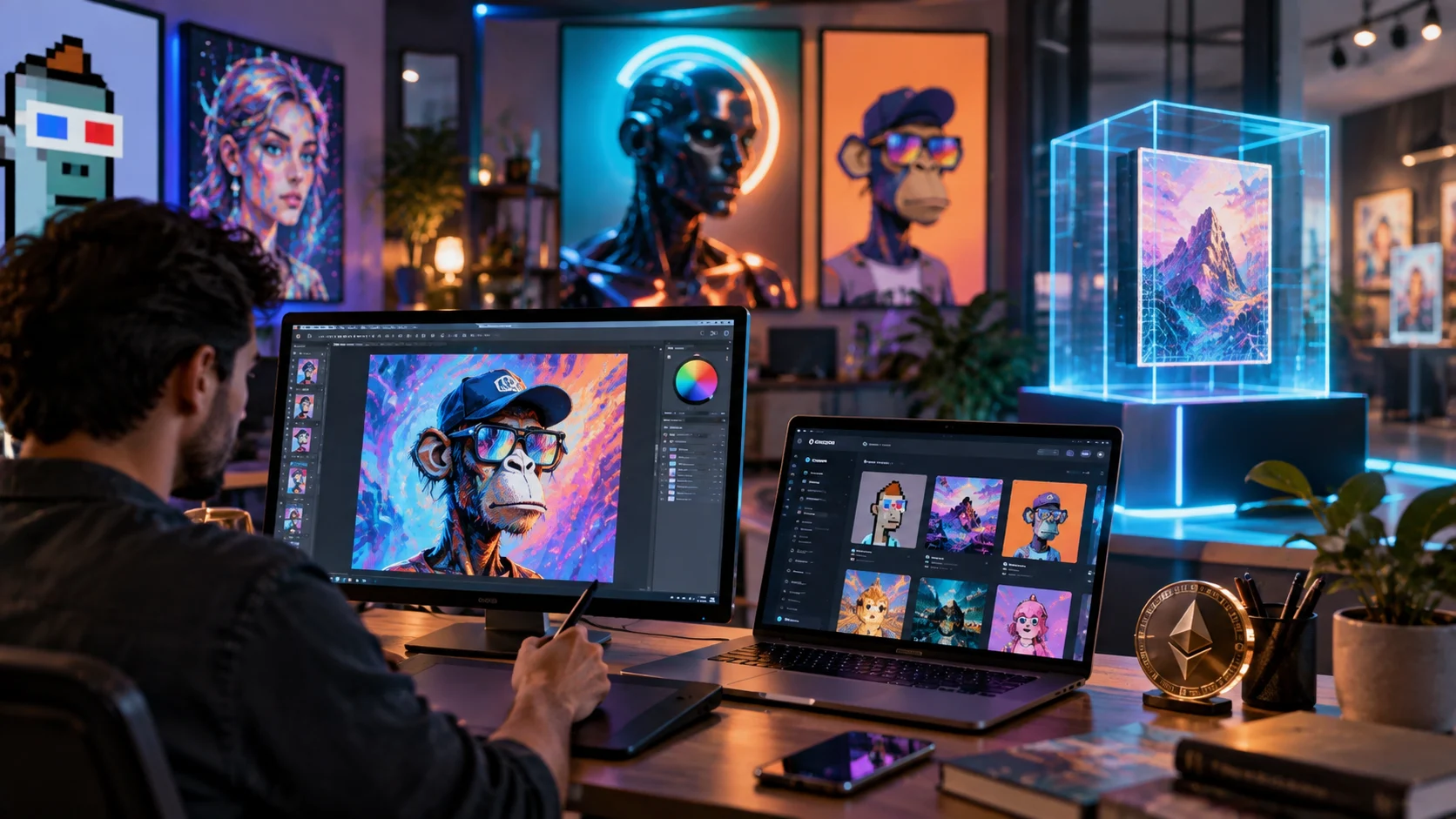
NFT art became one of the most discussed digital trends of the last several years because it gave artists a new way to sell digital creations as blockchain-based assets. Instead of simply sharing an image online, creators could connect artwork to a unique token that records ownership and transaction history on a blockchain.
The idea can sound complicated at first because NFT art combines digital creativity, cryptocurrency, blockchain technology, online marketplaces, wallets, and smart contracts. However, the basic concept is straightforward once you understand the role each part plays. An NFT does not usually mean someone owns every copyright associated with an artwork; it represents ownership of a specific blockchain token connected to that digital item.
Whether you are an artist considering minting your first piece or a collector exploring digital art, understanding the process is important before spending money. This guide explains what NFT art is, how it works, how to create and buy NFTs, how artists sell them, and what risks beginners should consider.
What Is NFT Art?
NFT art is digital artwork linked to a non-fungible token recorded on a blockchain. The artwork itself might be an illustration, animation, photograph, 3D model, music-related visual, generative piece, or another digital creation. The token acts as a unique blockchain record associated with that specific digital asset.
The term “non-fungible” means the token is not directly interchangeable with another identical unit. One dollar can generally be exchanged for another dollar of the same value, but two NFTs may have completely different designs, histories, rarity, creators, and market values. This uniqueness is what allows digital pieces to be treated as individual collectible assets.
NFT ownership is different from simply downloading an image. Anyone may be able to view or save a digital artwork, but the blockchain records which wallet owns the associated token. Buyers should still review the rights attached to each purchase because NFT ownership does not automatically transfer copyright or unrestricted commercial usage rights.
How Does NFT Art Work?
NFT art relies on blockchain technology, which stores transaction records across a distributed network. When an NFT is created, information about the token is added to the blockchain. Depending on the platform and blockchain, this information can include the creator, token identifier, ownership history, and a reference to the artwork or its metadata.
The process of creating an NFT is commonly called minting. During minting, a smart contract creates the token and associates it with specific metadata. The artwork itself may be stored using different methods, while the token acts as the blockchain-based record that people can transfer between compatible digital wallets.
When someone purchases an NFT, ownership of the token moves from one blockchain address to another. The blockchain records that transfer, creating a visible transaction history. This transparency allows collectors to verify previous ownership and token activity, although buyers still need to confirm that the original creator and marketplace listing are legitimate.
What Types of Art Can Become NFTs?
Almost any original digital artwork can potentially be connected to an NFT. Artists commonly create digital paintings, character illustrations, pixel art, photography, animations, 3D designs, looping videos, and generative artwork. Some projects also combine visual art with music, virtual experiences, gaming assets, or access to online communities.
Physical artists can also participate by creating digital versions of their work. A painter might photograph or scan a physical piece and create an NFT connected to the digital representation. Some artists additionally offer the physical artwork to the NFT buyer, although this arrangement should be explained clearly in the listing terms.
Generative art is another popular category in the NFT space. Artists create systems or algorithms that produce variations based on predefined rules, colors, traits, or patterns. Collections may contain hundreds or thousands of related pieces, with certain attributes appearing less frequently and potentially being treated as rarer by collectors.
How to Create NFT Art
Start by creating an original digital artwork using the tools and format that best suit your creative style. You might use illustration software, photography tools, 3D modeling programs, animation applications, or generative systems. Make sure you have the legal right to use every visual, font, sound, or other creative element included in the finished piece.
Next, choose a blockchain and NFT marketplace that support the type of asset you want to create. Different networks can vary in transaction costs, environmental design, wallet compatibility, audience size, and marketplace availability. Beginners should research these differences before choosing where their first NFT collection will exist.
You will generally need a compatible cryptocurrency wallet to interact with NFT platforms. After connecting the wallet, you can upload your artwork, add a title and description, define collection information, and follow the marketplace process for creating the token. Always double-check wallet prompts and transaction details before approving blockchain activity.
How to Mint an NFT
Minting turns your digital creation into a blockchain token. After uploading your artwork to a compatible platform, you usually provide metadata describing the piece. This may include the artwork name, description, collection, attributes, file information, or other details that help collectors understand what the NFT represents.
Some blockchain transactions require network fees, often called gas fees, although the cost and payment structure vary depending on the blockchain and marketplace. Certain platforms may use methods that postpone or reduce upfront minting expenses. Artists should review all fees carefully because creating and selling an NFT does not guarantee that those expenses will be recovered.
After the minting process is completed, the NFT can appear in your wallet or marketplace profile. You can then decide whether to keep it, transfer it, or list it for sale. Before publishing, verify that the artwork, creator information, description, and collection details are accurate because blockchain transactions can be difficult or impossible to reverse.
How to Buy NFT Art
Buying NFT art usually begins with creating a cryptocurrency wallet compatible with the blockchain used by the NFT. You may then need cryptocurrency to pay for the artwork and any associated transaction fees. The exact buying process varies depending on whether the marketplace supports fixed-price purchases, auctions, offers, or other sales methods.
Before purchasing anything, research the creator and verify that the collection is legitimate. Scammers may copy artwork, impersonate artists, create fraudulent collections, or send buyers toward fake marketplace pages. Checking verified creator profiles, official social channels, contract information, and transaction history can reduce the risk of purchasing an unauthorized token.
Collectors should also avoid buying purely because an NFT appears popular or may increase in price. Digital collectibles can be highly speculative, and resale demand may disappear quickly. Treat NFT art primarily as a creative or collectible purchase unless you fully understand the financial risks associated with volatile digital asset markets.
How to Sell NFT Art
To sell an NFT, artists generally list the token on a compatible marketplace and choose a pricing method. You may set a fixed price, accept offers, or use an auction depending on the platform. Consider production costs, network fees, previous sales, collection size, audience demand, and your existing reputation when deciding how to price a piece.
Presentation matters because collectors often evaluate the artist as well as the artwork. Create a clear description explaining the creative concept, format, collection, and any benefits attached to ownership. Building a recognizable artistic identity across your website, social platforms, and chosen NFT marketplace can also make your work easier for potential collectors to discover.
Selling NFT art usually requires more than simply minting a token and waiting for buyers. Artists often build communities, share their creative process, collaborate with other creators, and consistently publish new work. Avoid artificial hype or unrealistic promises because long-term credibility is more valuable than temporarily attracting attention through exaggerated claims.
NFT Marketplaces and Digital Wallets
An NFT marketplace is an online platform where users can create, browse, buy, and sell blockchain-based digital assets. Different marketplaces may focus on broad collections, fine digital art, gaming items, photography, or particular blockchain ecosystems. Their fees, verification processes, supported wallets, and listing tools can differ significantly.
A digital wallet allows you to hold blockchain assets and approve transactions. Your wallet address can generally be shared publicly when receiving assets, but private keys and recovery phrases must remain confidential. Anyone who obtains your recovery phrase may be able to control the assets in your wallet, making wallet security extremely important.
Consider using separate wallets for different purposes if you regularly interact with unfamiliar platforms. Some collectors keep valuable assets in a wallet that is not used for everyday browsing or experimental applications. This separation can reduce exposure if you accidentally approve a malicious transaction or connect to an unsafe website.
What Gives NFT Art Value?
NFT art does not have one universal method of valuation. Collectors may consider the artist’s reputation, visual quality, rarity, historical significance, community interest, utility, ownership history, or personal connection to the artwork. Two visually similar NFTs can therefore sell for dramatically different prices depending on context and demand.
Scarcity can influence pricing when an artist creates limited editions or collections with rare characteristics. However, scarcity alone does not guarantee value. A token can be extremely rare and still attract little demand if collectors are not interested in the artwork, creator, collection, or broader project.
Market sentiment also plays a major role because NFT prices can change rapidly. Trends, social attention, celebrity involvement, cryptocurrency conditions, and community activity may influence demand. Buyers should therefore avoid assuming that a previous sale price guarantees future value or that expensive NFTs are automatically higher-quality art.
Risks of Buying and Selling NFT Art
Scams remain one of the biggest risks in the NFT ecosystem. Fake websites, copied collections, phishing messages, malicious wallet approvals, and impersonated creators can cause users to lose cryptocurrency or digital assets. Always confirm website addresses and avoid signing wallet transactions you do not understand.
Financial risk is another major concern. NFT prices can be extremely volatile, and some assets may become difficult to resell regardless of their original purchase price. Artists may also spend money on creation, minting, promotion, and transaction fees without making enough sales to recover those expenses.
Copyright disputes can create additional problems. Minting an artwork does not automatically prove the person had permission to use the underlying content. Artists should only tokenize work they created or are legally authorized to use, while buyers should verify creator authenticity before purchasing expensive digital collectibles.
How Artists Can Build a Successful NFT Presence
Artists should begin by developing a recognizable creative style rather than focusing only on what appears commercially popular. Strong work gives collectors a reason to remember the creator even when market trends change. Building a portfolio before launching a collection can also demonstrate consistency and make your artistic direction easier to understand.
Community engagement can help artists develop genuine relationships with collectors and other creators. Share sketches, work-in-progress images, behind-the-scenes decisions, and explanations of your artistic process. People who understand the story behind an artwork may feel more connected to the final piece than those who only see a marketplace listing.
Consistency matters more than constantly producing large collections. Release work at a pace that allows you to maintain quality and communicate clearly with your audience. Long-term trust is especially important in digital markets where anonymous projects, abandoned collections, and misleading promises have made many collectors more cautious.
Conclusion
NFT art combines digital creativity with blockchain-based ownership records. Artists can connect illustrations, photography, animation, 3D work, generative designs, and other digital creations to unique tokens that can be transferred between wallets and traded through online marketplaces.
Creating and selling NFT art involves choosing a blockchain, setting up a compatible wallet, preparing original artwork, minting a token, and selecting a marketplace. Buyers should research artists carefully, verify collections, understand transaction fees, and avoid assuming that every digital collectible will increase in financial value.
The NFT space offers creative possibilities, but it also carries technical, financial, security, and copyright risks. Whether you are creating or collecting, focus on understanding the technology before committing significant money. Careful research, secure wallet practices, realistic expectations, and genuine appreciation for the artwork can make participation more responsible.
FAQs
What does NFT mean in art?
NFT stands for non-fungible token. In digital art, it is a blockchain-based token associated with a specific creative asset and used to record ownership and transaction history.
Can anyone create NFT art?
Yes, artists can generally create NFTs if they have original digital work and access to a compatible blockchain platform and wallet. They must also have the legal rights to the content being tokenized.
Do you own the copyright when you buy NFT art?
Not automatically. Buying an NFT usually transfers ownership of the token, not the underlying copyright. Usage and commercial rights depend on the terms established by the creator or project.
Is NFT art still risky to buy?
Yes. NFT values can be volatile, and buyers may face scams, fake collections, wallet theft, or limited resale demand. Researching the creator and understanding transaction risks is important before purchasing.
How do NFT artists make money?
NFT artists can earn money by selling original tokens, limited editions, or collections. Depending on the marketplace and smart contract structure, creators may also receive compensation from certain secondary sales.