
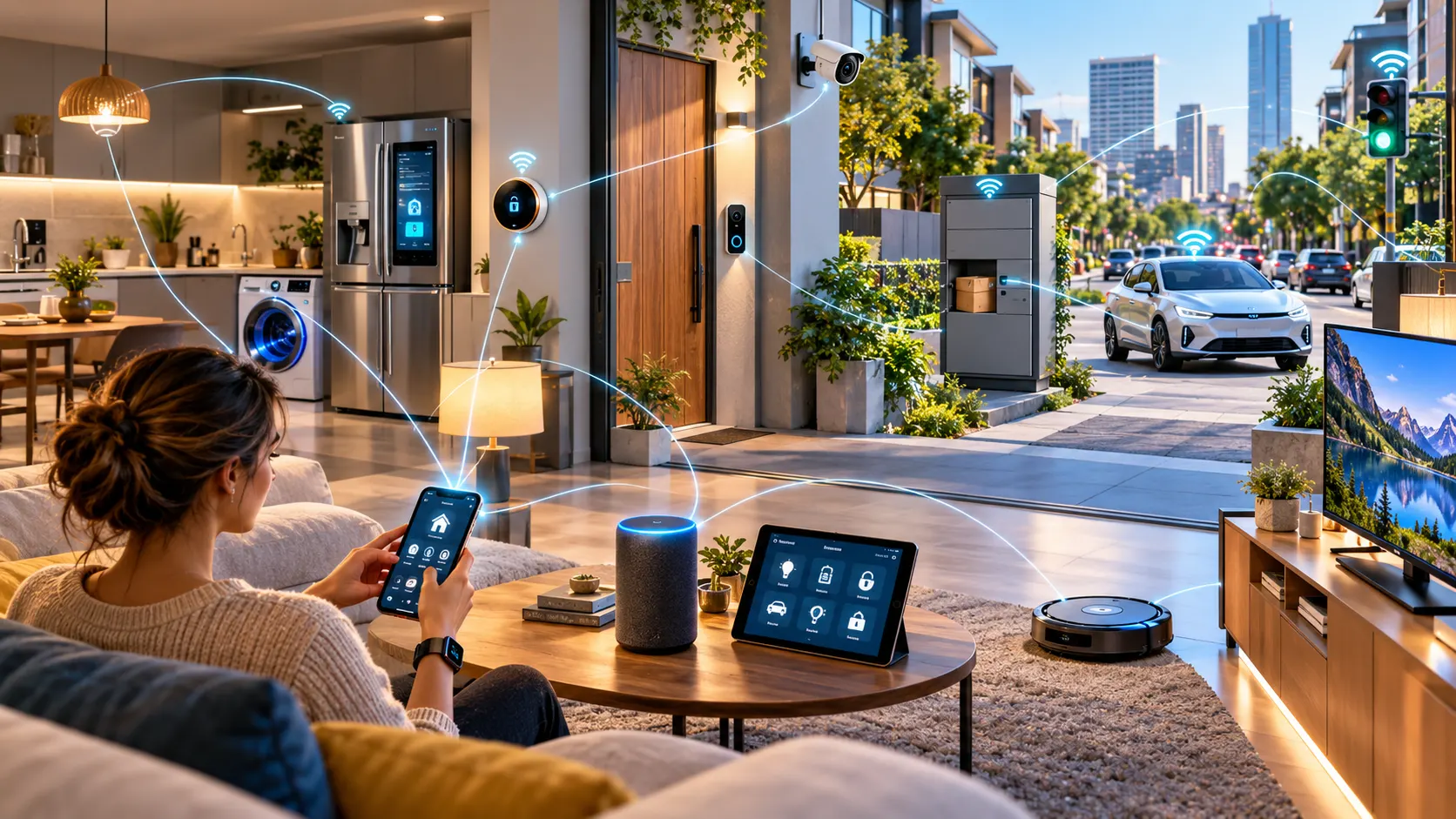
Understanding real-life Internet of Things examples can help you recognize how connected technology works and why it matters. IoT devices use sensors, software, and network connections to collect information, exchange data, and automate everyday tasks. This guide explores 15 common IoT examples you may encounter at home, while traveling, or in public spaces.
1–2. Smart Speakers and Smart Displays
Smart speakers are among the most familiar Internet of Things examples found in modern homes. Devices such as Amazon Echo and Google Nest speakers connect to networks and respond to voice commands. Users can request information, set reminders, control compatible appliances, and manage connected home devices without using traditional switches or buttons.
Smart displays offer similar functionality while adding interactive screens that show useful visual information. These devices can display recipes, calendars, weather updates, and live feeds from compatible home cameras. Their combination of voice interaction, internet connectivity, and visual controls makes them useful for managing several everyday household activities from one location.
Both technologies demonstrate how IoT connects different electronic products through a shared smart home ecosystem. For example, a person can ask a compatible smart speaker to adjust lighting or check a connected thermostat. These interactions depend on supported integrations, network availability, and the permissions configured within the connected devices.
3–4. Smart Light Bulbs and Smart Plugs
Smart light bulbs allow users to control lighting through mobile applications, voice assistants, and automated schedules. Unlike conventional bulbs, connected lighting products may support adjustable brightness, customizable colors, and remote operation. Some systems can also respond to motion sensors or automatically follow routines created around daily household activities.
Smart plugs turn certain ordinary electrical devices into remotely controlled appliances through compatible network connections. For example, a suitable lamp connected to a smart plug can be switched on or off through an application. Users can also create schedules that control compatible devices at selected times without manually operating their switches.
Together, smart lighting and plugs demonstrate how basic household activities can become more convenient through automation. These products may also provide electricity usage information, depending on the model and available features. Users should always follow electrical ratings and manufacturer instructions because remote switching does not make every appliance suitable for unattended operation.
5. Smart Thermostats for Home Temperature Control
Smart thermostats are IoT devices that allow people to monitor and adjust indoor temperatures through connected systems. Unlike traditional thermostats, many models support mobile applications, programmable schedules, and remote temperature adjustments. Some products can also learn household routines or use occupancy information to manage heating and cooling more conveniently.
For example, a homeowner can use a compatible application to check temperature settings while away from home. Certain smart thermostats can automatically adjust supported heating or cooling systems based on schedules and environmental conditions. These capabilities may reduce unnecessary energy consumption when properly configured for the household and its equipment.
Smart thermostats demonstrate how sensors, software, and internet connectivity work together to manage everyday environments. Their actual benefits depend on the climate, heating equipment, home insulation, and user preferences. They are useful examples of smart home automation because they turn routine temperature adjustments into a more flexible process.
6. Smart Video Doorbells for Home Monitoring
Smart video doorbells combine cameras, motion sensors, and network connectivity to help users monitor activity near an entrance. When someone approaches or presses the doorbell, compatible systems can send notifications to a connected smartphone. Many devices also support two-way audio, allowing users to communicate with visitors remotely.
For example, a homeowner receiving a delivery can check the doorbell’s camera feed through an application. Depending on the system, they may speak with the delivery person without opening the door. Certain models also provide event recordings, although access to recorded footage may depend on local storage or subscription features.
Video doorbells demonstrate how Internet of Things technology improves convenience through connected monitoring and real-time communication. However, users should consider privacy when positioning cameras or recording shared spaces. Strong account authentication, secure settings, and regular software updates can help protect connected doorbell systems from unauthorized access.
7. Smart Security Cameras and Connected Surveillance
Smart security cameras are common IoT devices used to monitor homes, offices, and other authorized spaces. These cameras can connect to local networks or cloud services, depending on their design. Many models provide motion notifications, remote video viewing, and recording options through compatible mobile applications or monitoring platforms.
Some advanced cameras can distinguish between certain types of movement using built-in image analysis. For example, a compatible camera may identify a person approaching an entrance and send a notification. These features can help users review relevant events, although automated detection is not always accurate and may generate false alerts.
Connected cameras illustrate how sensors and network technology support remote monitoring without requiring someone to remain physically present. Privacy considerations are particularly important because cameras may capture sensitive personal information. Secure passwords, software updates, appropriate recording settings, and careful camera placement help encourage responsible use of these devices.
8. Smart Door Locks and Keyless Entry Systems
Smart door locks use electronic controls and wireless communication to manage access without relying exclusively on traditional physical keys. Depending on the model, users may unlock doors through authorized smartphones, keypads, or other supported credentials. Some connected locks also provide notifications when access events occur.
For example, a household may use a compatible smart lock to create temporary access credentials for an approved visitor. Certain products let users review access activity and manage permissions through a mobile application. These capabilities can be convenient, although the available functions vary across manufacturers and security configurations.
Smart locks demonstrate how IoT technology connects physical access systems with digital identity management. Reliable installation, strong authentication, updated software, and suitable backup access methods are important considerations. Users should choose products that meet their security requirements rather than assuming every internet-connected locking system offers identical protection.
9. Smart TVs and Connected Entertainment Systems
Smart televisions are familiar examples of Internet of Things technology because they connect traditional entertainment devices to network-based services. Unlike older televisions, smart TVs can access supported streaming applications, online content, and software updates. Many models also provide voice search, personalized interfaces, or connections with other compatible household devices.
For example, someone can use a smart TV to stream educational videos, watch online programs, or access selected applications. Certain systems can also communicate with compatible speakers and smart home platforms. This connectivity creates a more flexible entertainment experience without requiring a separate computer for every online activity.
Connected televisions demonstrate how ordinary consumer electronics have developed into software-driven network devices. However, internet connectivity also creates privacy and security considerations involving account information, viewing data, and application permissions. Reviewing settings, installing updates, and using trustworthy applications can help maintain a more secure entertainment environment.
10. Fitness Trackers and Wearable Health Technology
Fitness trackers are everyday IoT examples that use sensors to collect information about physical activity and selected wellness indicators. Many devices monitor steps, movement patterns, and estimated activity levels throughout the day. They typically synchronize information with smartphone applications through wireless connections, allowing users to review activity trends.
For example, someone taking regular walks may use a connected fitness tracker to review their step count and activity history. Certain wearables also estimate sleep patterns, heart rate, and exercise duration. These measurements can help users understand general activity habits, although their accuracy depends on the device and conditions.
Wearable fitness technology demonstrates how small sensors and connected software can make everyday activity information more accessible. However, consumer wearable measurements should not automatically be treated as medical diagnoses. Users should also review privacy settings because synchronized health and activity information can be sensitive personal data.
11. Smart Refrigerators and Connected Kitchen Appliances
Smart refrigerators are examples of IoT technology entering everyday kitchens through connected appliances and integrated sensors. Depending on the model, they may provide temperature monitoring, maintenance alerts, or notifications when a refrigerator door remains open. Some products include displays that connect to household calendars or other supported services.
Advanced connected refrigerators may also feature internal cameras or food management applications that help users review stored items. These capabilities vary widely, and not every smart refrigerator automatically identifies its contents. Users should evaluate which features provide practical value rather than assuming all connected appliances offer the same functions.
These appliances demonstrate how IoT can support household convenience through monitoring and information sharing. Similar technology may appear in connected ovens and other kitchen equipment, although features depend on individual product designs. Reliable network security and proper appliance maintenance remain important alongside any additional digital functions.
12. Smart Washing Machines and Laundry Appliances
Smart washing machines use connected features to make routine laundry tasks easier to monitor and manage. Many models can send notifications when a wash cycle finishes or provide information about selected settings. Some appliances also support diagnostic alerts that help users recognize certain maintenance issues.
For example, someone working in another room can receive an application notification when their laundry cycle is complete. Certain washing machines allow compatible programs to be selected through connected controls, although remote operation depends on manufacturer safeguards. These features can reduce the need to repeatedly check the appliance during routine household activities.
Smart laundry appliances demonstrate how IoT technology connects ordinary machines with digital monitoring systems. Their usefulness depends on available features, installation requirements, and household preferences. Remote operation should always follow manufacturer safety instructions, particularly when appliances require physical preparation before beginning a cycle.
13. Connected Cars and Smart Vehicle Technology
Modern connected cars use sensors, onboard computers, and network communication to support different driving and vehicle management functions. Depending on the manufacturer, vehicles may offer traffic information, navigation updates, remote status checks, and maintenance notifications. These capabilities allow certain information to move between the vehicle and compatible digital services.
For example, a driver may receive a notification about vehicle maintenance or check available status information through a manufacturer’s application. Connected navigation systems can also use current traffic data to suggest alternative routes. Some vehicles provide remote climate-control features when supported by their design and safety requirements.
Connected vehicles demonstrate how IoT extends beyond homes into modern transportation systems. However, network-based convenience features should not be confused with autonomous driving capabilities. Vehicle owners should maintain software updates, review data-sharing settings, and follow manufacturer guidance when using connected functions.
14. Smart Irrigation Systems and Connected Garden Sensors
Smart irrigation systems use connected controllers and environmental information to help manage watering schedules for lawns, gardens, and landscaped areas. Some products use local weather information, while others connect to compatible soil moisture sensors. These systems can adjust watering routines according to configured conditions rather than relying exclusively on fixed schedules.
For example, a connected irrigation controller may postpone a planned watering session when reliable weather information indicates sufficient rainfall. Another system may use soil moisture readings to determine whether watering is needed. These features can help reduce unnecessary watering when the equipment and settings are appropriate.
Smart irrigation provides a practical Internet of Things example involving environmental monitoring and automated resource management. Its effectiveness depends on local weather, plant requirements, sensor accuracy, and correct system configuration. Regular maintenance remains important because an automated system cannot compensate for damaged equipment or unsuitable watering arrangements.
15. Smart Parking Sensors and Connected City Infrastructure
Smart parking sensors are examples of IoT technology used in some cities, parking facilities, and transportation systems. Connected sensors can detect whether designated parking spaces are occupied and share this information with management platforms. The collected data helps operators understand parking availability and monitor how facilities are being used.
For example, a parking facility may display available spaces using information collected from network-connected sensors or cameras. Some systems also share availability estimates through applications or electronic signs. This can help drivers locate suitable parking areas more conveniently, although accuracy depends on the technology and system maintenance.
Smart parking illustrates how Internet of Things technology can support public infrastructure beyond individual households. Similar connected systems may help monitor street lighting, environmental conditions, and other urban services. Privacy protections, cybersecurity controls, and reliable maintenance are important when deploying IoT devices across shared public environments.
Conclusion
The Internet of Things is already part of everyday life through smart speakers, connected lighting, wearable devices, household appliances, and modern transportation systems. These technologies use sensors, software, and network connectivity to exchange information and support useful automated functions. Understanding common IoT examples helps explain how familiar objects are becoming more interactive.
The 15 Internet of Things examples discussed in this guide demonstrate applications across homes, entertainment, personal wellness, vehicles, and public infrastructure. Their benefits can include convenience, remote monitoring, and more responsive resource management. However, actual performance depends on device capabilities, configuration, network reliability, and user requirements.
As IoT technology continues developing, connected devices are likely to remain important in homes, businesses, and communities. Choosing trustworthy products, maintaining software updates, and protecting personal information can help users benefit from these technologies responsibly. Understanding how IoT works makes it easier to recognize its practical value and limitations.
Frequently Asked Questions (FAQs)
What is the Internet of Things in simple words?
The Internet of Things refers to physical devices that use sensors, software, and network connections to collect or exchange data. These connected devices can support remote monitoring, automation, and communication with other systems.
What are five common examples of IoT devices?
Five common Internet of Things examples include smart speakers, smart thermostats, video doorbells, fitness trackers, and smart televisions. These devices use connectivity to provide digital services, monitoring, or automation.
Is a smartphone an Internet of Things device?
Smartphones are usually considered general-purpose connected computing devices rather than typical IoT objects. However, they often act as controllers or gateways for smart home products, wearable devices, and other connected equipment.
How is IoT used in everyday life?
IoT is used for home lighting, temperature control, security monitoring, wearable activity tracking, connected appliances, and transportation services. It allows compatible devices to exchange information and automate selected everyday activities.
What are the main benefits of Internet of Things technology?
IoT technology can improve convenience, enable remote monitoring, support automation, and provide useful information for decision-making. Its benefits depend on reliable connections, appropriate security controls, and the practical capabilities of each device.

 is changing how people interact with technology in their everyday lives.)