
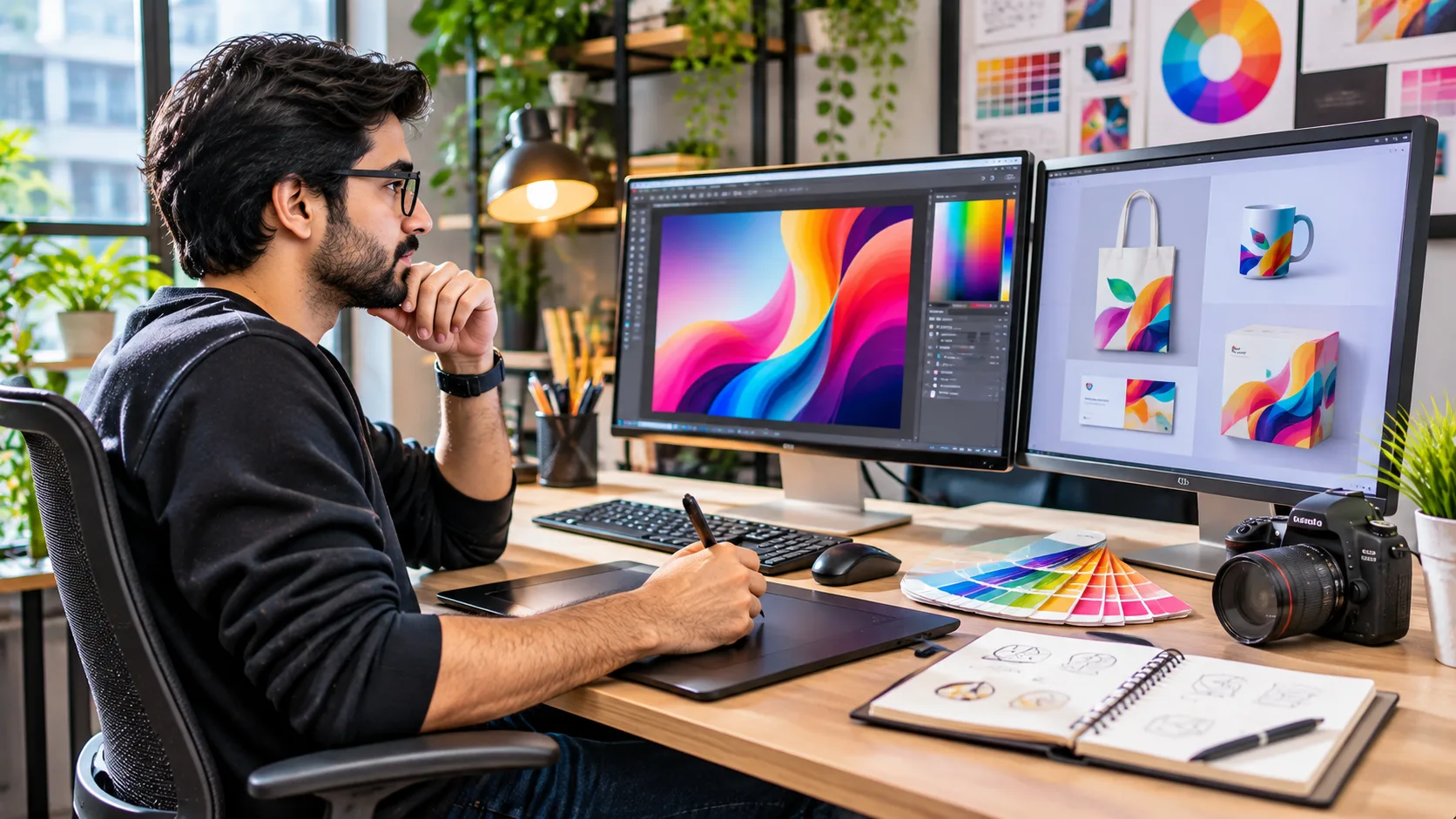
What Is a Graphic Designer?
A graphic designer is a creative professional who uses images, colors, typography, and layouts to communicate ideas visually. Graphic designers create materials such as logos, advertisements, websites, brochures, and social media graphics. Their work helps businesses share information and connect with customers. By combining artistic creativity with practical communication skills, they transform ordinary messages into attractive and understandable visual content.
Understanding what is a graphic designer involves looking beyond the ability to create beautiful pictures. Professional designers must understand the message, target audience, and purpose behind every project. They choose suitable visual elements to make information easier to understand and remember. Whether designing a product package or marketing campaign, their work connects creative decisions with communication goals.
What Does a Graphic Designer Do Every Day?
A graphic designer’s daily responsibilities depend on their workplace, experience, and project requirements. Common tasks include creating visual concepts, selecting fonts, editing images, and preparing layouts for digital or printed materials. Designers also review project instructions and communicate with clients or managers. Their main goal is producing visual content that meets specific communication, branding, and technical requirements.
Most design projects begin with understanding what the client or organization wants to achieve. A designer may research the audience, examine competitor designs, and develop several creative concepts. After choosing a direction, they create drafts using appropriate design software. Feedback and revisions are normal parts of the process because the initial concept may require adjustments before final approval.
Designers also prepare completed projects for their intended platforms. Printed materials require suitable dimensions, color settings, and file specifications, while digital graphics need appropriate formats and screen-friendly layouts. Checking spelling, alignment, image quality, and visual consistency is equally important. These final steps help ensure that designs appear professional and function correctly wherever they are published.
Essential Skills Every Graphic Designer Should Have
Creativity is one of the most recognizable graphic designer skills, but effective design requires more than original ideas. Designers must understand color theory, composition, visual hierarchy, spacing, and typography. These principles help organize information and direct attention toward important elements. Strong design fundamentals make it easier to create visuals that are attractive, readable, and appropriate for their intended audience.
Communication and problem-solving skills are equally valuable in professional graphic design. Designers often need to explain creative choices, understand client feedback, and resolve conflicting requirements. Listening carefully helps them identify the real purpose behind a project instead of focusing only on appearance. Good communication also supports productive relationships with clients, project managers, writers, and other creative professionals.
Time management and attention to detail help designers work successfully under deadlines. Many professionals handle several projects simultaneously, each requiring different revisions and delivery dates. They must organize files, maintain design consistency, and review completed materials for errors. Adaptability is also important because client preferences, technology, and visual communication trends continue changing across different industries.
Graphic Design Software and Tools You Should Learn
Graphic designers use specialized software to create, edit, and organize visual content. Adobe Photoshop is commonly used for image editing, while Adobe Illustrator supports vector illustrations and logo design. Adobe InDesign is useful for creating multi-page layouts, brochures, and publications. Understanding these tools can help designers complete different projects efficiently while maintaining professional production standards.
Other popular tools include Figma, Canva, Affinity applications, and CorelDRAW. Figma is especially useful for collaborative interface design and digital layouts, while Canva provides accessible tools for creating marketing graphics. Different software packages serve different purposes and experience levels. Beginners should choose tools according to their learning goals rather than attempting to master every available application immediately.
Technical knowledge extends beyond knowing where software buttons are located. Designers should understand file formats such as SVG, PNG, JPEG, and PDF, along with resolution and export settings. Print projects may require knowledge of bleed areas and CMYK color preparation. Digital projects often involve RGB colors and responsive layouts, making accurate technical preparation essential for professional results.
Education and Qualifications Needed for Graphic Design
Many graphic designers study graphic design, visual communication, fine arts, or related subjects at college or university. Formal programs often cover typography, illustration, layout, digital design, and creative problem-solving. Students may also learn about branding, advertising, and design history. This structured education helps build a foundation for understanding both creative techniques and professional communication requirements.
A university degree is common for many traditional graphic design positions, but it is not the only possible learning path. Some designers develop skills through online courses, vocational training, practical projects, and independent study. Employers may consider demonstrated abilities alongside formal qualifications, particularly for certain freelance or junior roles. However, specific educational requirements vary between companies and positions.
Professional certifications can help demonstrate familiarity with particular software applications or design workflows. Nevertheless, certificates alone rarely replace a strong understanding of design principles and practical experience. Employers often want to see finished projects that demonstrate creativity and technical competence. Building a portfolio while studying is therefore one of the most valuable steps toward starting a graphic design career.
Different Types of Graphic Design Jobs
Graphic design offers several specializations based on the type of visual content being created. Brand identity designers develop logos, color systems, typography guidelines, and other elements that represent businesses. Marketing designers create advertisements, campaign graphics, and promotional materials. Both roles require understanding how consistent visual communication helps organizations establish recognition and communicate with their audiences.
Publication designers work on books, magazines, reports, and other information-heavy materials. Packaging designers develop the visual appearance of product containers, labels, and retail packaging. Motion graphic designers create animated visual elements for videos, presentations, and digital media. Each specialization uses related design principles but requires different technical knowledge and production methods depending on the final format.
Digital design provides additional career opportunities involving websites, mobile applications, and online platforms. Some graphic designers move into user interface design, although UI and UX positions require additional knowledge of usability and interaction. Others specialize in illustration, presentation design, or environmental graphics. Exploring different areas helps aspiring professionals identify work that matches their interests and strengths.
Where Do Graphic Designers Work?
Graphic designers work in advertising agencies, design studios, publishing companies, technology businesses, and corporate marketing departments. Some positions focus on creating materials for one organization, while agency jobs involve serving several clients. The working environment influences project variety, deadlines, and collaboration requirements. Designers may work independently or as part of larger creative teams with different professional responsibilities.
In-house graphic designers create visual materials for a particular company’s products, services, and communication channels. Their responsibilities may include social media graphics, presentations, advertisements, and internal documents. Working with one organization allows designers to develop a detailed understanding of its brand identity. However, they must maintain consistency while finding creative approaches to recurring design requirements.
Freelance graphic designers operate independently and provide services to clients on a project or contract basis. Some work remotely from home, while others collaborate with businesses in shared offices or studios. Freelancing offers flexibility in choosing projects and clients, but it also involves managing payments, communication, contracts, and deadlines. Success requires both creative abilities and dependable business practices.
Graphic Designer Salary: How Much Can You Earn?
Graphic designer salaries vary considerably depending on location, experience, specialization, and employer. In the United States, the median annual wage for graphic designers was $62,960 in May 2025. This means half of employed graphic designers earned more than that amount, while the other half earned less. The figure is a national benchmark rather than a guaranteed salary for every position.
The same U.S. wage data showed that the lowest-paid ten percent earned less than $39,520 annually, while the highest-paid ten percent earned more than $104,910. These figures demonstrate the wide variation in graphic design compensation. Entry-level positions commonly pay less than experienced or senior roles. Earnings also depend on regional labor markets, employer budgets, and the complexity of assigned responsibilities.
Freelance graphic designer income works differently because professionals may charge hourly rates, fixed project fees, or ongoing retainers. Their earnings depend on project volume, pricing, experience, and operating expenses. Successful freelancers may earn substantial income, but workloads and payments can fluctuate. Designers should consider software subscriptions, taxes, unpaid administrative time, and other expenses when evaluating freelance earning potential.
How to Build a Strong Graphic Design Portfolio
A graphic design portfolio is a collection of completed projects that demonstrates a designer’s creative and technical abilities. It helps potential employers and clients understand the type of work a professional can produce. A strong portfolio typically includes logos, advertisements, layouts, or other relevant examples. Quality and relevance are more important than displaying a large number of unrelated designs.
Portfolio projects should explain the thinking behind the finished visuals. Instead of showing only a final logo, designers can describe the client’s requirements, intended audience, and creative decisions. Including early concepts and selected revisions demonstrates problem-solving abilities. This context helps employers understand how the designer approaches challenges rather than judging work entirely by its visual appearance.
Beginners can create portfolio examples through personal projects, classroom assignments, internships, or clearly labeled fictional brand concepts. These projects provide opportunities to practice professional workflows without requiring extensive paid experience. Designers should regularly update their portfolios as skills improve. Selecting work that matches desired job opportunities makes the portfolio more useful during applications and client discussions.
Graphic Design Career Growth and Future Opportunities
Graphic design careers can develop in several directions as professionals gain experience and build specialized abilities. Junior designers may progress into senior graphic designer, creative lead, or art director positions. Some eventually become creative directors responsible for larger teams and overall visual strategy. Others establish independent studios or develop expertise in branding, packaging, and digital product design.
Technology continues influencing the skills expected of graphic designers. Artificial intelligence tools, automation, and collaborative design platforms can simplify certain production tasks and accelerate creative workflows. However, designers still need judgment to understand audiences, evaluate ideas, and produce appropriate visual communication. Learning how to use emerging tools responsibly can support productivity without replacing essential design fundamentals.
Career opportunities should also be considered realistically because competition and automation affect hiring conditions. In the United States, employment of graphic designers is projected to decline by approximately two percent between 2025 and 2035. Nevertheless, openings are expected as workers change careers or retire. Developing adaptable skills, strong portfolios, and industry knowledge can improve long-term career prospects.
How to Become a Graphic Designer as a Beginner
Starting a graphic design career begins with learning fundamental visual design principles. Study typography, color relationships, composition, alignment, contrast, and visual hierarchy before focusing heavily on advanced software features. Practice by examining effective advertisements, logos, and website layouts. Understanding why particular designs communicate successfully helps beginners develop stronger creative judgment and more reliable design skills.
Next, choose one or two suitable software applications and complete practical projects regularly. Beginners might create a fictional business logo, an event poster, a social media campaign, or a simple brochure. Each project should have clear objectives and realistic design requirements. Reviewing completed work and seeking constructive feedback can reveal areas that need improvement.
Once you have developed a small portfolio, explore internships, junior design positions, and suitable freelance opportunities. Prepare a resume that highlights relevant skills, software knowledge, and completed projects. Practice presenting design decisions clearly during interviews or client discussions. Continued learning, professional communication, and consistent project experience provide a practical foundation for building a sustainable graphic design career.
Conclusion
A graphic designer is a creative professional who combines visual design principles with communication and technical skills. Their work includes developing logos, advertising materials, digital graphics, publications, and other visual content. Graphic designers help businesses communicate information and establish recognizable identities. The profession offers several specializations, making it suitable for people interested in both artistic creativity and practical problem-solving.
Building a graphic design career requires knowledge of design fundamentals, relevant software, and professional communication. Education, practical projects, and a strong portfolio can help aspiring designers demonstrate their abilities. Salary expectations vary according to experience, location, specialization, and employment arrangements. Understanding these factors provides a more realistic picture of career opportunities and potential earnings.
For beginners wondering what is a graphic designer and how to enter the profession, the best starting point is developing practical skills through consistent learning. Focus on producing thoughtful designs rather than simply mastering software shortcuts. Explore different specializations, collect constructive feedback, and improve your portfolio over time. These habits can support professional growth in a competitive and evolving creative industry.
Frequently Asked Questions (FAQs)
What does a graphic designer do?
A graphic designer creates visual content that communicates information or promotes products and services. Common projects include logos, advertisements, social media graphics, brochures, packaging, and digital layouts using specialized design software.
What skills do you need to be a graphic designer?
Important skills include creativity, typography, color theory, layout design, communication, and attention to detail. Knowledge of graphic design software, time management, and problem-solving also supports professional work.
How much does a graphic designer make?
In the United States, graphic designers earned a median annual wage of $62,960 in May 2025. Actual salaries vary according to experience, location, employer, specialization, and employment arrangements.
Can you become a graphic designer without a degree?
Yes, some professionals enter graphic design through self-study, practical training, and strong portfolios. However, many employers prefer relevant formal education, especially for traditional salaried positions. Hiring requirements depend on the organization.
Is graphic design a good career for the future?
Graphic design offers creative opportunities across many industries, but competition and automation are changing the job market. Developing strong fundamentals, specialized skills, and adaptability can improve career prospects.