
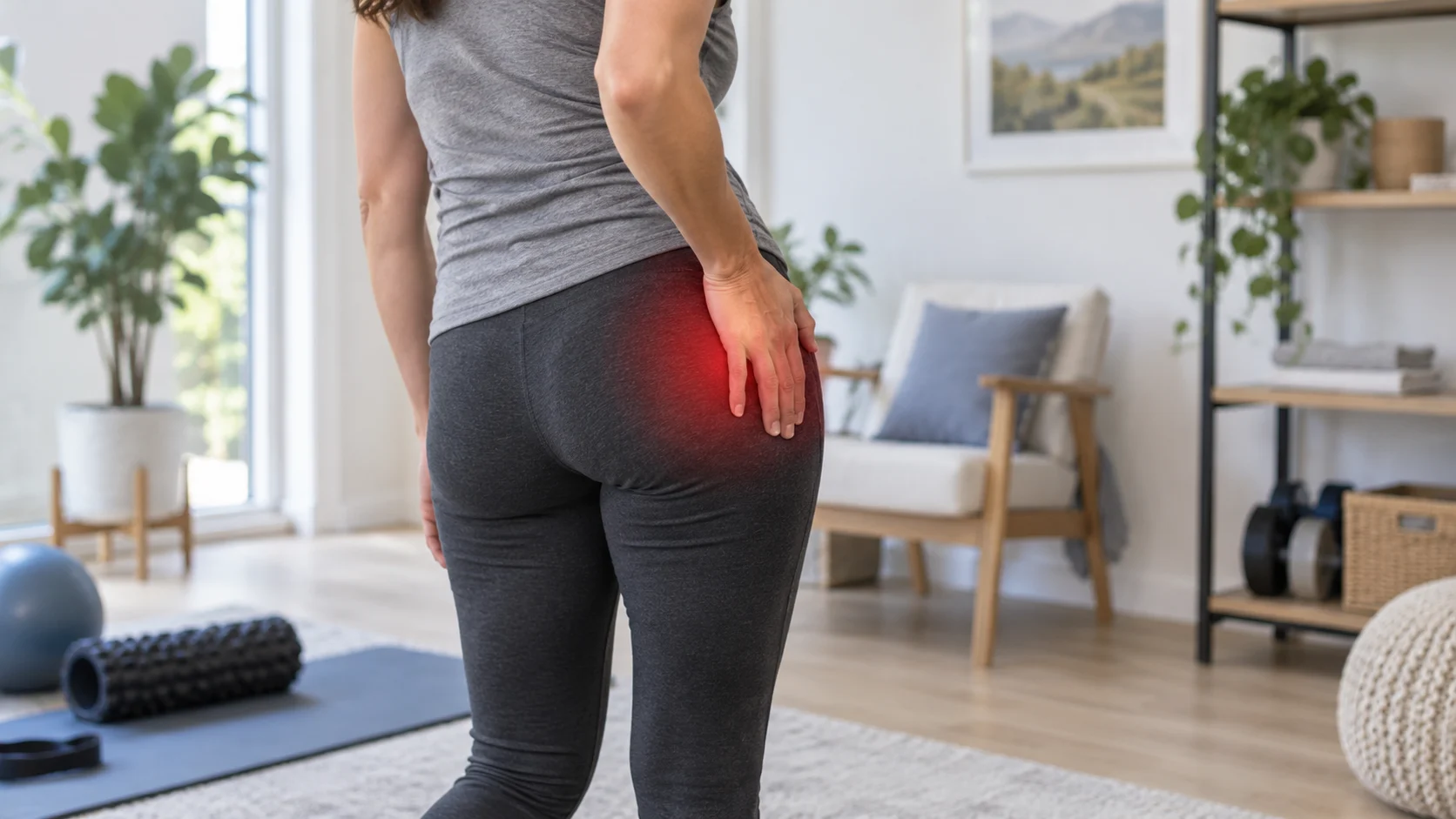
Pain in one or both butt cheeks can make sitting, walking, exercising, climbing stairs, or even sleeping uncomfortable. The discomfort may feel like a dull ache, sharp pain, burning, tightness, or pressure depending on what is causing it. Sometimes the pain stays in the buttock, while in other cases it travels into the hip, thigh, or lower leg.
Several muscles, joints, tendons, nerves, and soft tissues meet around the buttock and pelvis, so the same general area can hurt for very different reasons. Minor muscle strain may improve with rest, while nerve irritation or joint problems may require more specific care. Understanding common causes can help you decide what to watch, what may help, and when professional evaluation is appropriate.
What Does Butt Cheek Pain Usually Feel Like?
Butt cheek pain can appear in the center of the buttock, near the outer hip, close to the tailbone, or around the lower back and pelvis. Some people notice soreness only when sitting, while others feel discomfort during walking or exercise. The exact location and activity that triggers the pain can provide useful clues.
Muscle-related pain often feels sore, tight, or tender when you press the area or use the affected muscles. Nerve-related pain may feel burning, electric, tingling, or shooting and may travel down the leg. Joint-related problems can create deeper aching around the pelvis, especially during standing, bending, or changing positions.
Pay attention to whether the symptoms started suddenly after activity or developed gradually. Also notice whether you have numbness, weakness, swelling, bruising, or pain below the knee. These details can help a healthcare professional distinguish between a simple soft-tissue problem and something involving nerves, joints, or other structures.
Glute Muscle Strain and Overuse
The gluteal muscles help stabilize the hips, support walking, and generate force during activities such as running, climbing stairs, and squatting. Sudden increases in exercise or an awkward movement can strain these muscles. The result may be localized buttock soreness that becomes more noticeable when contracting or stretching the affected area.
Muscle strain may also happen after returning to exercise following a long break. Sprinting, lunges, heavy lifting, hill walking, or repeated lower-body workouts can overload muscles that are not yet adapted to the workload. Mild strains often feel tender and may improve gradually when the aggravating activity is reduced.
Rest does not always mean avoiding all movement. Gentle walking and comfortable daily activity can often continue if they do not increase the pain. However, sharp pain, major bruising, significant weakness, or difficulty bearing weight deserves medical evaluation because those symptoms may indicate a more substantial injury.
Piriformis Irritation and Sciatica-Like Pain
The piriformis is a small muscle located deep in the buttock that helps control hip movement. Irritation in this region can produce pain that feels deep in one butt cheek and may worsen with prolonged sitting, climbing stairs, or certain hip movements. Some people also describe tingling or discomfort traveling farther down the leg.
Sciatica refers to symptoms associated with irritation of the sciatic nerve or its nerve roots. Pain may begin in the lower back or buttock and travel through the thigh, calf, or foot. Because several conditions can create similar patterns, buttock pain that radiates down the leg should not automatically be blamed on one specific muscle.
If discomfort begins affecting the way you walk, symptoms may appear elsewhere in the lower body as well. Understanding issues such as ankle pain when walking can be helpful when considering how changes in gait may affect multiple areas. Persistent numbness or weakness should be assessed professionally.
Sacroiliac Joint Pain
The sacroiliac, or SI, joints connect the lower spine to the pelvis. Irritation around one of these joints can create pain close to one side of the lower back or upper buttock. Some people notice discomfort when standing from a chair, climbing stairs, rolling over in bed, or remaining on one leg.
SI joint pain can sometimes be difficult to distinguish from muscle strain or lower-back problems because the symptoms overlap. Pain may stay localized near the joint or spread slightly into the buttock and upper thigh. A physical examination is often needed to determine whether the joint itself is contributing to the symptoms.
Avoid assuming that every one-sided buttock ache comes from the SI joint. Hip problems, gluteal tendons, nerves, and lower-back structures can all create similar pain patterns. If symptoms keep returning or limit your normal activity, a clinician can assess movement, strength, and tenderness to identify the most likely source.
Gluteal Tendon Pain and Bursitis
Tendons connect the gluteal muscles to bone around the hip. Repetitive loading, sudden activity changes, or reduced strength can irritate these tendons and produce pain around the outer buttock or side of the hip. Symptoms may become more noticeable during walking, climbing stairs, or lying on the affected side.
Bursae are small fluid-filled structures that reduce friction around joints and tendons. Irritation around the outer hip can sometimes create tenderness and pain that spreads toward the buttock. People may find that direct pressure, such as sleeping on that side, makes the discomfort worse.
Treatment depends on the exact structure involved, so persistent lateral hip or buttock pain should be assessed rather than repeatedly stretched without a diagnosis. Some tendon problems respond better to gradually increased strengthening than aggressive stretching. A physical therapist or other qualified professional can help determine which movements are appropriate.
Can Sitting Too Long Cause Butt Cheek Pain?
Long periods of sitting can create pressure through the buttocks and may contribute to stiffness or soreness, especially on firm chairs. Remaining in one position also reduces normal movement through the hips and lower back. People who work at a desk or drive for hours may notice discomfort developing gradually by the end of the day.
Posture can influence how pressure is distributed, but there is no single perfect sitting position that must be maintained constantly. The body generally responds better to movement and variety. Standing periodically, walking for a few minutes, and changing positions can reduce prolonged pressure on the same muscles and soft tissues.
If one specific seat consistently causes pain, consider adjusting chair height, seat depth, and back support. A cushion may feel more comfortable for some people, although it will not fix every underlying problem. Pain that continues after sitting changes or becomes progressively worse should be evaluated for other causes.
At-Home Relief Tips for Mild Buttock Pain
For mild discomfort after activity, temporarily reducing the movements that clearly trigger pain can be a reasonable first step. This does not necessarily mean complete bed rest. Gentle movement can help prevent stiffness, while repeated heavy lifting, sprinting, or deep lower-body exercises may need to be reduced until symptoms settle.
Cold or heat may provide temporary comfort depending on what feels better to you. A wrapped cold pack can be useful after a recent strain, while gentle warmth may help some people with muscle tightness. Avoid extreme temperatures or placing heating and cooling devices directly against bare skin for prolonged periods.
Over-the-counter pain medicines may be appropriate for some people, but they are not suitable for everyone. Medical conditions, allergies, pregnancy, or other medications can affect which options are safe. If you are unsure, ask a pharmacist or healthcare professional rather than taking medication simply because it is commonly used.
Stretches and Exercises That May Help
Gentle stretching can sometimes help when buttock discomfort is related to temporary muscle tightness. Hip stretches, light hamstring movement, and easy walking may feel comfortable for some people. Any stretch should create mild tension rather than sharp, burning, or shooting pain.
Strengthening can be more useful than stretching for certain problems, especially when the gluteal muscles or surrounding hip muscles need better load tolerance. Exercises such as bridges, controlled side steps, and carefully performed hip movements are often used in rehabilitation. Progress should be gradual rather than increasing resistance quickly.
Do not assume that every buttock problem should be stretched aggressively. Nerve irritation, tendon problems, and acute muscle injuries can respond differently to the same exercise. If a movement consistently increases symptoms or causes pain to travel farther down the leg, stop and seek individualized guidance.
When Butt Cheek Pain Needs Medical Attention
Seek medical advice if pain is severe, continues to worsen, or does not improve with reasonable activity changes. Pain that causes persistent limping or prevents you from sitting, walking, or sleeping comfortably deserves assessment. A clinician can examine your hip, back, pelvis, muscles, and nerves to narrow down the possible cause.
Urgent evaluation is important if pain follows a significant fall or accident, or if you cannot bear weight normally. Severe swelling, obvious deformity, increasing redness, fever, or an open wound also require attention. These signs are not typical of a simple muscle ache and may indicate a more serious problem.
Numbness, significant leg weakness, or changes in bladder or bowel control require prompt medical attention. These symptoms can sometimes signal serious nerve involvement. Pain that repeatedly travels down the leg, especially with weakness or loss of sensation, should also be evaluated rather than managed only with stretching or massage.
Conclusion
Butt cheek pain can come from several different sources, including muscle strain, tendon irritation, SI joint problems, prolonged sitting, or nerve-related conditions. The location, timing, and type of pain can provide useful clues, but symptoms often overlap. This is why persistent discomfort should not automatically be labeled as sciatica or a pulled muscle.
For mild symptoms, reducing aggravating activity, changing sitting habits, and using gentle movement may help. Stretching or strengthening can also be useful when chosen appropriately for the underlying problem. Avoid forcing exercises that produce sharp pain, numbness, or symptoms traveling farther down the leg.
Professional evaluation is important when pain is severe, persistent, associated with weakness, or interfering with normal movement. A healthcare professional can determine whether the problem involves muscles, tendons, joints, nerves, or another structure. Identifying the likely cause makes it easier to choose a safer and more effective recovery approach.
FAQs
Why does one butt cheek hurt when I sit?
Prolonged pressure, muscle irritation, nerve sensitivity, or problems around the hip or pelvis can cause one-sided buttock pain while sitting. Persistent symptoms should be assessed if changing positions does not help.
Can sciatica cause pain only in the buttock?
Yes, sciatica-related irritation can sometimes be felt mainly in the buttock, although symptoms may also travel down the leg. Burning, tingling, numbness, or shooting pain can suggest nerve involvement.
Can exercise cause butt cheek pain?
Yes. Running, squats, lunges, lifting, or sudden increases in activity can strain the gluteal muscles or irritate surrounding tendons. Reduce aggravating exercise if soreness becomes sharp or progressively worse.
Is walking good for buttock pain?
Gentle walking may help some types of mild muscle-related pain and stiffness. Stop or reduce activity if walking increases symptoms, causes limping, or makes pain travel farther down the leg.
How long should butt cheek pain last?
Minor muscle soreness may improve over several days, but recovery depends on the cause. Pain that lasts, worsens, or includes numbness, weakness, or major swelling should be professionally evaluated.