
Pelvic floor tension can cause discomfort that affects sitting, exercise, urination, bowel movements, and everyday movement. Some people describe pressure, tightness, aching, burning, or a feeling that the pelvic muscles cannot fully relax. Because these muscles work with the hips, abdomen, back, and breathing system, symptoms can sometimes feel confusing or appear in more than one area.
Managing pelvic floor tension usually involves understanding what triggers symptoms rather than simply trying to strengthen the muscles. Gentle relaxation, breathing, movement changes, and professional pelvic floor therapy may help in appropriate situations. Safety matters because pelvic discomfort can also come from urinary, digestive, gynecologic, musculoskeletal, neurological, or other medical conditions that need proper evaluation.
What Is Pelvic Floor Tension?
The pelvic floor is a group of muscles and connective tissues located at the bottom of the pelvis. These muscles help support pelvic organs and contribute to bladder control, bowel function, sexual function, and trunk stability. Like other muscles, they need to contract when necessary and then relax appropriately afterward.
Pelvic floor tension occurs when these muscles remain overly active, tight, guarded, or difficult to relax. The problem is sometimes called an overactive or hypertonic pelvic floor, although terminology can vary. A person may have strong muscles that are still too tense, so tightness should not automatically be treated as weakness.
Symptoms can vary considerably because the pelvic floor works closely with surrounding muscles and nerves. Some people experience discomfort mainly during sitting or exercise, while others notice urinary urgency, constipation, pressure, or pain with certain activities. A proper assessment can help determine whether muscle tension is actually contributing to the symptoms.
Common Signs of Pelvic Floor Tension
One possible sign is a persistent feeling of tightness, pressure, or aching in the pelvis, perineum, lower abdomen, or nearby hip region. Symptoms may become more noticeable after long periods of sitting, stressful days, intense exercise, or repeatedly tightening the abdominal and pelvic muscles. Some people also notice discomfort that changes throughout the day.
Urinary symptoms can include urgency, frequency, difficulty starting the stream, or feeling that the bladder has not emptied comfortably. Bowel movements may also feel difficult if the pelvic floor does not relax properly. These symptoms have many possible causes, however, so they should not automatically be assumed to come from muscle tension alone.
Some people experience pain with sexual activity, pelvic examinations, or inserting tampons, while others feel discomfort around the tailbone or rectal area. Tingling, burning, or pressure can sometimes occur as well. Because similar symptoms can result from infections, nerve problems, or other conditions, persistent discomfort deserves medical evaluation rather than self-diagnosis.
What Can Cause or Increase Pelvic Floor Tension?
Pelvic floor tension can develop for several reasons rather than from one single cause. Repeatedly bracing the abdomen, holding urine for long periods, constipation, intense exercise, painful experiences, or guarding around an injury may all contribute in some people. Stress can also increase unconscious muscle holding throughout the body, including the pelvic region.
Hip, back, abdominal, and pelvic muscles work together during movement and breathing. Changes in posture, movement patterns, or pain elsewhere can sometimes lead the pelvic floor to remain more active than necessary. This does not mean poor posture directly causes every pelvic problem, but the surrounding musculoskeletal system can influence how the muscles behave.
Medical conditions can also contribute to pelvic symptoms, which is why assessment matters. Urinary infections, gastrointestinal conditions, pelvic pain disorders, postpartum changes, surgery, and certain neurological problems may produce symptoms that overlap with pelvic floor tension. Identifying the underlying problem is more useful than assuming every symptom should be treated with stretching.
When Gentle Pelvic Floor Relaxation May Help
Gentle relaxation techniques may be useful when symptoms are related to excessive muscle holding rather than weakness alone. Slow diaphragmatic breathing can encourage movement through the abdomen and pelvic floor without forcing the muscles. The goal is usually to reduce unnecessary tension rather than actively pushing or bearing down.
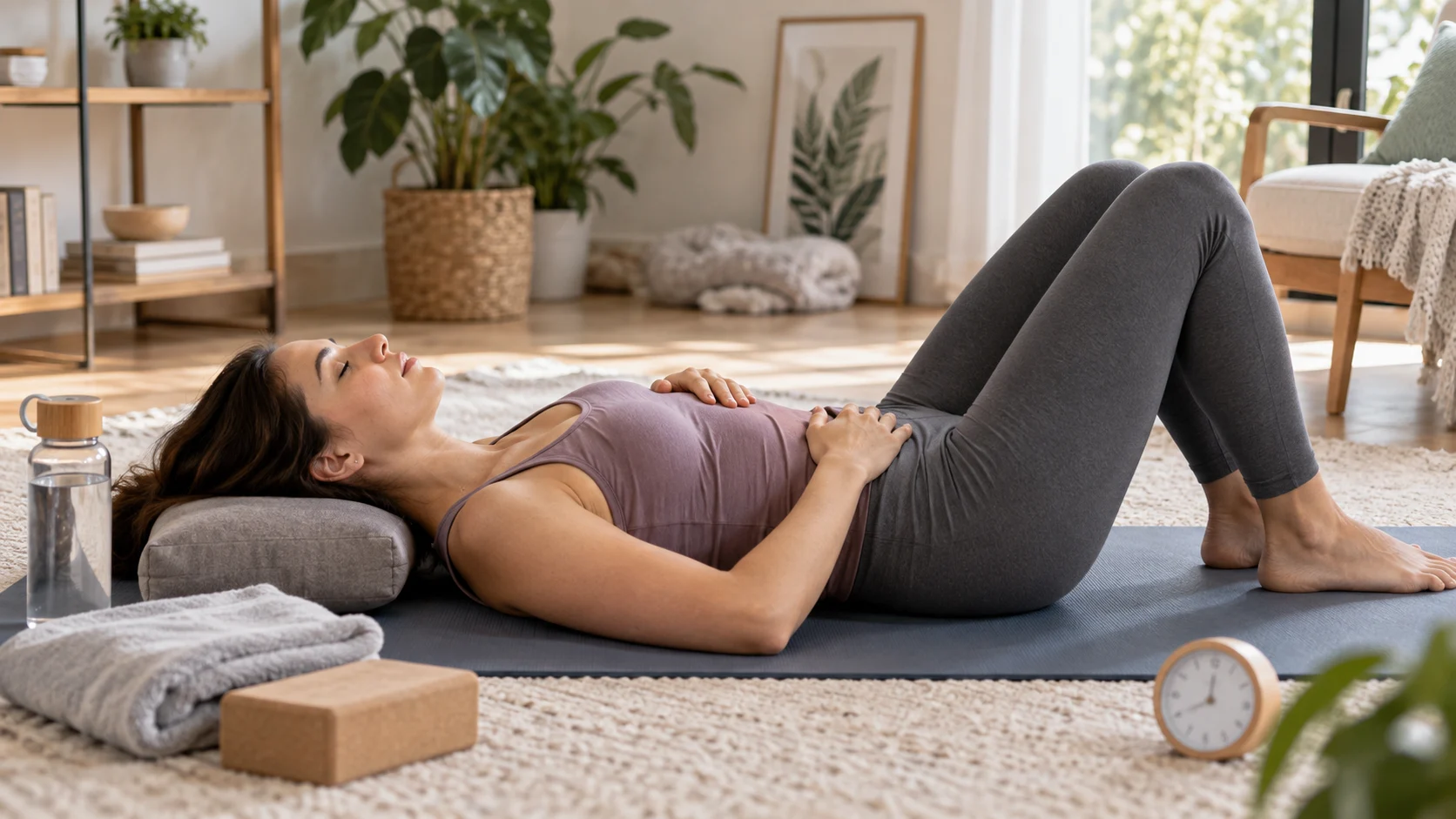
Comfortable positions can make relaxation easier. Lying on your back with knees supported, resting on your side, or using another position where the abdomen and hips feel relaxed may help you notice whether you are unconsciously tightening. Breathing slowly and allowing the belly to expand naturally can be more helpful than trying to force the pelvis downward.
Relaxation should not cause sharp pain, increased pressure, numbness, or worsening urinary symptoms. If a technique repeatedly increases discomfort, stop rather than assuming the pain means the muscle is releasing. People with persistent pelvic symptoms may benefit from individualized guidance from a pelvic floor physical therapist or other qualified healthcare professional.
Safety Tips Before Stretching or Exercising
Avoid forcing deep stretches simply because the pelvic floor feels tight. Aggressive hip stretching, prolonged positions, or strong pressure on painful tissues can sometimes increase irritation instead of reducing it. Gentle movements should feel manageable and should not leave symptoms noticeably worse for hours afterward.
It is also important to avoid treating every pelvic complaint with Kegel exercises. Kegels involve intentionally contracting the pelvic floor and can be useful for certain conditions, but they may worsen symptoms when the muscles are already overactive. Strength and relaxation are different needs, so the correct exercise depends on the individual’s assessment.
Stop exercising and seek medical advice if you develop unexplained bleeding, fever, severe pelvic pain, sudden weakness, or significant changes in bladder or bowel control. New numbness around the groin or saddle area also requires prompt medical attention. These symptoms should not be managed only with stretching or breathing exercises.
Best Timing for Pelvic Floor Relaxation Exercises
Relaxation exercises can be performed when your body is relatively comfortable rather than waiting until pain becomes intense. Some people find a few minutes of breathing helpful after waking, before sleep, or after long periods of sitting. A consistent short routine may be easier to tolerate than one long session performed only when symptoms flare.
Timing around exercise also matters. If intense workouts cause you to brace constantly or tighten the pelvic muscles, a few gentle breathing exercises afterward may help you transition out of that high-tension state. However, relaxation work should not be used to repeatedly push through an exercise program that consistently triggers significant pelvic pain.
During a symptom flare, shorter and gentler sessions may be better than long stretches or aggressive mobility work. Pay attention to how your symptoms respond over the following hours rather than judging only how the exercise feels in the moment. Gradual improvement is generally a better sign than temporary relief followed by increased discomfort.
Helpful Daily Habits for Reducing Pelvic Tension
Frequent movement can be helpful for people who spend many hours sitting. Standing, walking briefly, or changing positions reduces prolonged pressure through the pelvis and hips. You do not need to maintain one perfect posture all day, but remaining completely still for long periods may contribute to stiffness and discomfort.
Try to notice whether you regularly clench your buttocks, hold your breath, tighten your abdomen, or grip the pelvic floor without realizing it. These habits can become automatic during work, exercise, or stressful situations. Periodically checking your breathing and allowing unnecessary muscle tension to soften may help improve body awareness.
Bowel and bladder habits also matter. Repeatedly straining during bowel movements or consistently delaying urination for very long periods can place additional demand on the pelvic floor. Adequate hydration, comfortable toileting habits, and addressing persistent constipation with appropriate medical guidance can support healthier pelvic function.
Should You Do Kegels With Pelvic Floor Tension?
Kegels are often recommended whenever pelvic floor symptoms are mentioned, but they are not appropriate for every situation. If the muscles are already excessively tight and difficult to relax, repeatedly contracting them may increase discomfort. This is why pelvic floor strengthening should ideally be based on an assessment rather than symptoms alone.
Some people can have both weakness and excessive tension at the same time. A muscle may have poor coordination or endurance while still resting in an overactive state. In these cases, treatment may begin with relaxation and coordination before gradually adding strengthening when the muscles can move through a more normal range.
If you are unsure whether to strengthen or relax the pelvic floor, professional assessment is useful. A pelvic floor physical therapist can evaluate breathing, coordination, hip and abdominal function, and how the muscles respond during different activities. This helps avoid following a generic exercise program that may not match your needs.
How Buttock, Hip, and Pelvic Pain Can Overlap
The pelvic floor does not work in isolation. Muscles around the hips, buttocks, abdomen, and lower back all contribute to movement and stability, so discomfort can sometimes overlap between these regions. Someone with pelvic tension may also notice aching around the glutes, inner thighs, or lower back.
Changes in walking, prolonged sitting, or muscle guarding can make nearby areas feel sore even when the original problem started elsewhere. If you are experiencing nearby symptoms, learning about butt cheek pain can help you understand some common musculoskeletal causes of discomfort around the pelvis and hips.
However, overlapping pain does not prove that one area is causing the other. Nerves, joints, muscles, and internal pelvic structures can all refer discomfort into nearby regions. Persistent symptoms should therefore be assessed based on the full pattern rather than treated as a single tight muscle.
When to See a Pelvic Floor Specialist
Consider seeking professional help if pelvic tension lasts for several weeks, keeps returning, or affects urination, bowel movements, exercise, sexual activity, or sleep. A pelvic floor physical therapist can assess muscle coordination, breathing, movement patterns, and surrounding hip or abdominal function. Treatment can then be adapted to your actual symptoms.
Medical evaluation is also important when the cause of pelvic discomfort is uncertain. Urinary tract problems, infections, gastrointestinal conditions, gynecologic issues, prostate conditions, and neurological problems can sometimes resemble muscular pelvic pain. Proper diagnosis helps prevent unnecessary exercises from delaying treatment for another condition.
Seek prompt medical care for severe or rapidly worsening pain, fever, unexplained bleeding, new significant weakness, or major changes in bladder or bowel control. Numbness around the groin or saddle region also requires urgent attention. These warning signs should not be managed through home stretching alone.
Conclusion
Pelvic floor tension happens when the muscles around the bottom of the pelvis remain overly active or have difficulty relaxing normally. Symptoms can include pelvic pressure, aching, urinary changes, bowel difficulty, or discomfort that overlaps with the hips and buttocks. Because several conditions can create similar symptoms, accurate assessment matters.
Gentle breathing, regular movement, comfortable positioning, and reducing unnecessary muscle clenching may help some people. Aggressive stretching and repeated Kegel exercises are not automatically appropriate, particularly when the muscles are already tight. Exercise should feel manageable and should not create persistent increases in pain or pressure.
If symptoms continue, worsen, or interfere with normal activities, consider seeing a qualified healthcare professional or pelvic floor physical therapist. Individual assessment can determine whether relaxation, strengthening, mobility work, or another treatment approach is most appropriate. The safest plan is one based on the actual cause of your symptoms rather than a generic routine.
FAQs
What does pelvic floor tension feel like?
It may feel like pressure, aching, tightness, burning, or difficulty relaxing around the pelvis. Some people also notice urinary urgency, constipation, hip discomfort, or pain during certain activities.
Can stress make pelvic floor tension worse?
Yes. Stress can contribute to unconscious muscle clenching and shallow breathing, which may increase tension in some people. Relaxation strategies can help, but persistent symptoms still deserve proper assessment.
Should I stretch every day for pelvic floor tension?
Gentle daily movement may help, but aggressive stretching is not appropriate for everyone. Exercises should remain comfortable and should not cause increasing pain, pressure, numbness, or urinary symptoms.
Are Kegels bad for a tight pelvic floor?
Kegels can sometimes worsen symptoms when pelvic muscles are already overactive. A pelvic floor therapist can determine whether relaxation, coordination work, strengthening, or a combination is appropriate.
How long does pelvic floor tension take to improve?
Recovery varies depending on the cause, duration, and contributing factors. Some people improve gradually with appropriate care, while persistent or complex symptoms may require individualized pelvic floor therapy and medical evaluation.