
What Is the Metaverse? Understanding the Digital World
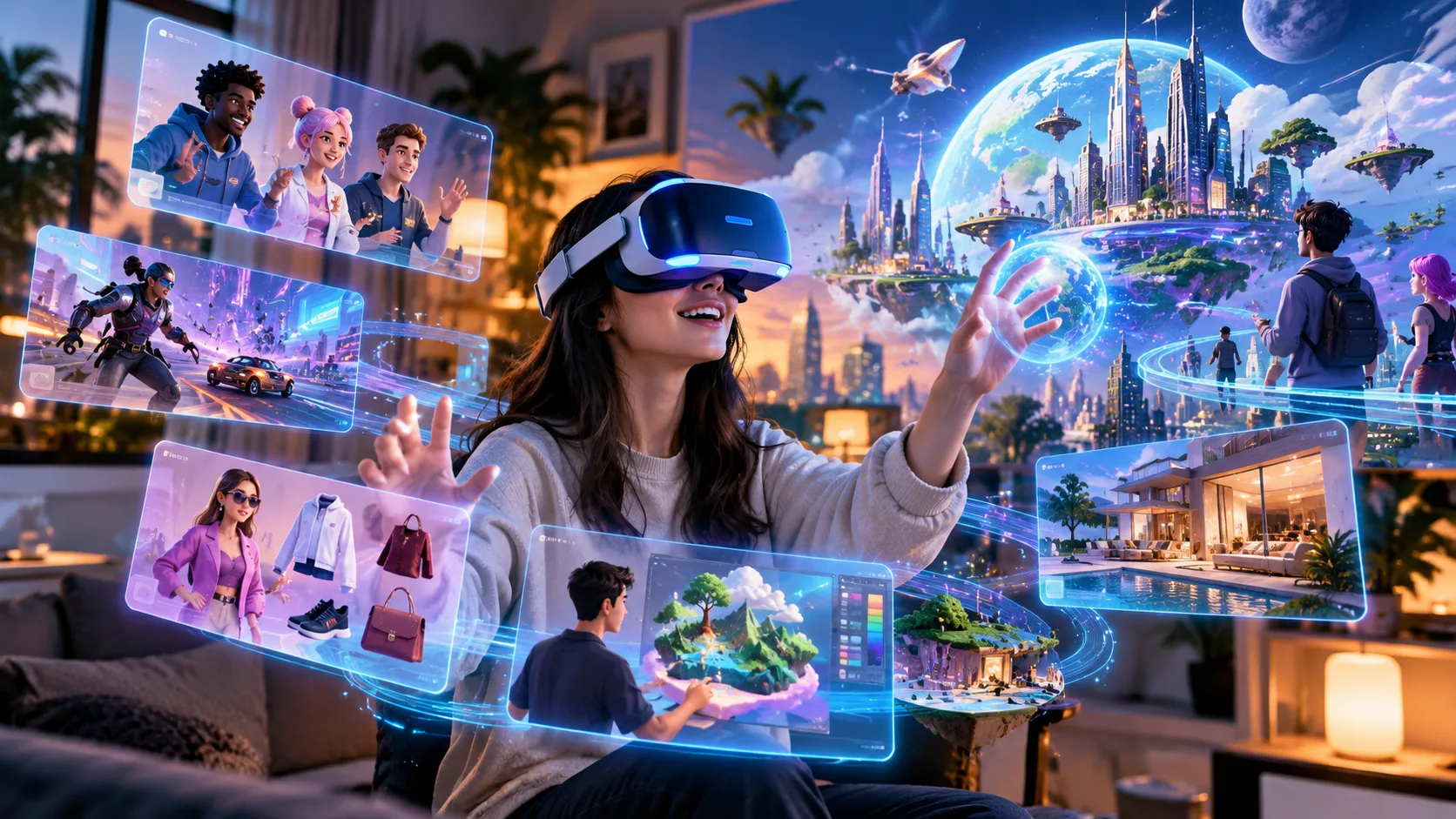
The metaverse is a concept describing shared digital environments where people can interact, communicate, explore, and participate in virtual experiences. Instead of simply browsing websites or watching videos, users can enter interactive spaces represented by digital characters called avatars. These environments may support activities such as gaming, social gatherings, virtual events, education, and creative collaboration.
Imagine attending a concert, exploring a digital city, or meeting friends inside a three-dimensional environment without leaving your home. This is the type of experience associated with the metaverse, although today’s platforms offer different capabilities. Some virtual spaces feel immersive, while others resemble familiar online games accessed through computers, smartphones, or specialized headsets.
Understanding what the metaverse is becomes easier when you recognize that it is not one single application or fully connected virtual universe. Instead, it represents an evolving collection of technologies and digital experiences. This beginner’s guide explains how the metaverse works, the technologies behind it, popular examples, potential benefits, and important challenges shaping its development.
How Does the Metaverse Work?
The metaverse works by combining interactive digital environments with technologies that allow people to communicate and participate in shared experiences. Software developers create virtual spaces using three-dimensional graphics, networking systems, and real-time computing. Users access these environments through supported devices and interact with digital objects, characters, and other participants according to each platform’s features.
Most metaverse-style environments allow users to create or customize an avatar representing their digital identity. These avatars can move through virtual locations, participate in activities, and communicate with others using supported interaction tools. Depending on the platform, users may explore different environments, create content, attend events, or collaborate on shared projects within the same digital ecosystem.
An important concept associated with the metaverse is persistence, meaning digital environments can continue existing when individual users disconnect. Another proposed feature is interoperability, which would allow certain identities or digital possessions to work across different platforms. However, today’s virtual worlds remain largely separate, and seamless movement between independent platforms is still limited.
Technologies That Power the Metaverse
Several technologies contribute to metaverse experiences, including virtual reality, augmented reality, three-dimensional graphics, artificial intelligence, and cloud computing. Each technology serves a different purpose in creating interactive digital environments. Together, they can support realistic visual experiences, communication between users, and digital spaces that respond to actions as they occur.
Virtual reality, commonly called VR, creates computer-generated environments that users can experience through compatible headsets. Augmented reality, or AR, places digital elements over views of the physical world through supported devices. Mixed reality combines physical surroundings with interactive digital objects, helping users experience technology that connects virtual content with their real environment.
Artificial intelligence can help developers create responsive digital characters, support content creation, and improve interactions within virtual environments. Cloud computing and network infrastructure enable online platforms to process information and connect participants across different locations. Advanced graphics engines contribute realistic lighting, movement, and environments, making digital experiences more visually engaging and interactive.
What Is the Difference Between Metaverse, VR, and AR?
The metaverse, virtual reality, and augmented reality are closely related concepts, but they do not mean exactly the same thing. The metaverse describes a broader vision of interconnected digital experiences and environments. VR and AR are technologies that can help people access or interact with those experiences, depending on the platform.
Virtual reality typically replaces the user’s immediate visual surroundings with a computer-generated environment displayed through a headset. Augmented reality adds digital information or objects to a view of the physical world. For example, an AR application might display a virtual piece of furniture inside your room, while VR could place you inside a completely simulated building.
Importantly, users do not always need VR headsets to participate in metaverse-style experiences. Many social virtual worlds and online gaming environments operate through ordinary screens and input devices. The distinction matters because the metaverse is a broader concept, while VR and AR describe particular methods of experiencing digital content.
Popular Examples of the Metaverse in Real Life
Several existing platforms demonstrate different aspects of the metaverse, although none represents a complete, universally connected digital world. Roblox provides user-created interactive experiences where participants can explore virtual environments and play games. Fortnite also supports social activities, creator-built spaces, and entertainment experiences beyond its traditional gaming features.
VRChat is another example of a social virtual environment, allowing users to interact through customizable avatars and explore community-created worlds. Meta Horizon Worlds has also offered social digital experiences, with its strategy increasingly emphasizing mobile access. These platforms demonstrate how digital environments can support social interaction, creativity, and entertainment through different technologies.
Other applications focus on professional collaboration, architectural visualization, industrial simulation, or three-dimensional design rather than entertainment. Some organizations use digital twins to represent real-world objects or processes for analysis and planning. These examples illustrate the metaverse’s broad potential while highlighting that available platforms differ significantly in their functions, accessibility, and technical capabilities.
How the Metaverse Is Changing Online Gaming
Gaming is one of the clearest examples of how shared virtual environments can support interactive digital experiences. Traditional video games often focus on defined objectives, while some metaverse-inspired platforms emphasize exploration, social participation, and user-created content. Players can enter virtual spaces, communicate with others, and experience activities created by developers or members of the community.
Platforms featuring digital worlds may allow users to customize avatars, design environments, and participate in collaborative experiences. Some games also host virtual performances, creative competitions, or interactive seasonal events. These features help transform gaming platforms into broader social spaces where entertainment includes activities beyond completing conventional game objectives.
However, not every multiplayer game qualifies as a metaverse, and the distinction remains open to interpretation. Many games provide shared environments without persistent identities or meaningful connections to other platforms. Online safety also matters, making privacy controls, age-appropriate settings, and careful management of social interactions important considerations for participants.
The Role of the Metaverse in Education and Learning
The metaverse could create new opportunities for education by making certain lessons more interactive and visually engaging. Students may explore simulated historical settings, examine three-dimensional scientific models, or participate in virtual learning environments. These experiences can help explain complex subjects through visualization, although educational value depends on thoughtful instructional design rather than technology alone.
For example, a virtual science environment might allow students to examine the structure of a human cell from different perspectives. History learners could explore a reconstructed ancient city while studying architecture and cultural traditions. Training simulations may also provide controlled environments for practicing professional skills without requiring access to expensive physical facilities.
Despite these possibilities, immersive learning environments face challenges involving accessibility, equipment costs, privacy, and educational effectiveness. Not every subject benefits from a three-dimensional experience, and conventional teaching methods remain essential. Schools and training organizations must evaluate whether virtual experiences genuinely improve understanding and meet the needs of different learners.
How Businesses Can Use the Metaverse
Businesses are exploring metaverse-related technologies to improve product visualization, employee training, collaboration, and customer experiences. Three-dimensional environments can help organizations demonstrate products or simulate workplace situations. These applications may offer practical value when they solve specific problems more effectively than traditional websites, meetings, or training materials.
Virtual showrooms allow customers to examine digital representations of certain products before making decisions. Architecture and engineering teams may use immersive models to understand spatial layouts and identify potential design issues. Some organizations also experiment with shared virtual workspaces where geographically separated employees can review three-dimensional content and collaborate on projects.
However, adopting metaverse technology does not automatically improve productivity or customer engagement. Businesses must consider development expenses, device compatibility, accessibility, and whether employees or customers actually benefit from immersive experiences. Successful applications usually begin with clearly defined needs rather than assuming that every existing activity should move into a virtual environment.
Digital Avatars, Virtual Goods, and Online Identity
Digital avatars are virtual representations that allow people to express themselves and participate in interactive online environments. An avatar might resemble a human character, a stylized figure, or another imaginative digital identity. Depending on the platform, users can personalize clothing, appearance, accessories, and movement to reflect their preferences or creative interests.
Some virtual platforms also include digital goods such as character accessories, decorative objects, or items used within games. These items may be available through free customization features, earned rewards, or platform-controlled purchasing systems. Ownership and transfer rights vary, and obtaining an item on one platform usually does not mean it works elsewhere.
The concept of digital identity raises important questions about personal information, account security, and user privacy. People may build social connections or creative reputations around their avatars, making account protection particularly important. Understanding platform rules and avoiding unnecessary disclosure of personal details can help create safer experiences within virtual communities.
Benefits and Opportunities of the Metaverse
One potential benefit of the metaverse is its ability to bring people together through interactive experiences regardless of physical distance. Shared virtual spaces may support communication, collaboration, and cultural exchange in ways that feel different from traditional video calls. Participants can explore environments together and interact with digital content while remaining in separate locations.
The metaverse may also provide opportunities for creativity, allowing developers, artists, educators, and designers to experiment with new forms of expression. Interactive storytelling, virtual exhibitions, and three-dimensional design tools can support projects that would be difficult to recreate physically. These possibilities encourage exploration of new approaches to entertainment, education, and professional collaboration.
Accessibility represents another potential opportunity, especially when virtual activities reduce the need for travel or physical access to specialized locations. However, these benefits depend on affordable devices, inclusive design, and reliable internet connections. Without thoughtful development, immersive technology could create additional barriers rather than making digital experiences accessible to everyone.
Challenges, Risks, and Limitations of the Metaverse
Privacy and data protection are significant challenges because immersive environments may collect information beyond what conventional websites typically require. Depending on the technology, platforms can process movement, voice, interaction patterns, and other user data. Clear privacy policies, secure systems, and meaningful user controls are important for protecting individuals participating in digital environments.
Online harassment, impersonation, scams, and exposure to inappropriate interactions are additional concerns associated with social virtual platforms. Users should understand available reporting features, privacy settings, and communication controls before participating. Younger users especially benefit from age-appropriate spaces, limited contact with strangers, and guidance from trusted adults when navigating unfamiliar online environments.
Technical limitations also prevent the metaverse from functioning as a seamless digital universe. High-quality immersive experiences may require expensive hardware, reliable connectivity, and substantial computing resources. Motion discomfort, accessibility difficulties, incompatible platforms, and uncertain business models further demonstrate why widespread adoption remains challenging despite continued technological development.
What Is the Future of the Metaverse?
The future of the metaverse is likely to involve gradual improvements in immersive computing, interactive digital environments, and supporting technologies. Developers are continuing to explore how artificial intelligence, spatial computing, and mixed reality can make digital experiences more useful. However, predictions about a single connected virtual universe remain uncertain, and current platforms still operate largely independently.
Rather than replacing the conventional internet entirely, metaverse-related technologies may become integrated into existing applications and services. Education, design, entertainment, and industrial training are areas where interactive environments could offer specific advantages. Broader adoption will depend on whether these experiences become affordable, comfortable, accessible, and genuinely useful for everyday activities.
Industry attention has also shifted toward practical spatial computing applications and artificial intelligence rather than focusing exclusively on the metaverse label. This does not mean immersive technology has disappeared, but it suggests that development priorities are evolving. The most meaningful progress will likely come from technologies that solve real problems rather than relying on ambitious promotional promises.
Conclusion
The metaverse is a broad concept describing interactive digital environments where people can communicate, explore, create, and participate in shared experiences. Technologies such as virtual reality, augmented reality, artificial intelligence, and cloud computing help support these environments. Although several platforms already demonstrate metaverse-like features, a completely interconnected virtual universe does not currently exist.
Understanding how the metaverse works helps distinguish practical digital applications from speculative predictions about future technology. Gaming, education, professional training, and creative collaboration demonstrate some of its potential uses. At the same time, privacy concerns, accessibility challenges, technical limitations, and platform compatibility remain important issues that developers must address.
For beginners, the metaverse is best understood as an evolving approach to digital interaction rather than a replacement for the entire internet. Its future will depend on technological progress, responsible design, and whether people find immersive experiences genuinely valuable. Learning the basic concepts provides a useful foundation for understanding how virtual environments may influence everyday digital life.
Frequently Asked Questions (FAQs)
What is the metaverse in simple words?
The metaverse refers to interactive digital environments where people can explore, communicate, play, and create through virtual representations. It is a developing concept rather than one fully connected online world.
Do you need a VR headset to enter the metaverse?
No, a VR headset is not always necessary. Many metaverse-style platforms work through computers, smartphones, or gaming devices, although compatible VR headsets can provide more immersive experiences.
Is the metaverse the same as the internet?
No, the metaverse is not identical to the internet. It describes interactive digital environments and experiences that use internet connectivity, while the internet supports a much wider range of services.
What can people do in the metaverse?
People can participate in virtual games, attend digital events, explore interactive environments, create content, and communicate through avatars. Available activities depend on each platform’s features and access requirements.
Is the metaverse the future of technology?
The metaverse could influence gaming, education, design, and online collaboration, but its long-term role remains uncertain. Widespread adoption depends on accessibility, practical value, technical improvements, and responsible development.